

Interview with Kurt Kleinschmidt, MA, LPC (he/him): Finding Hope and Perspective
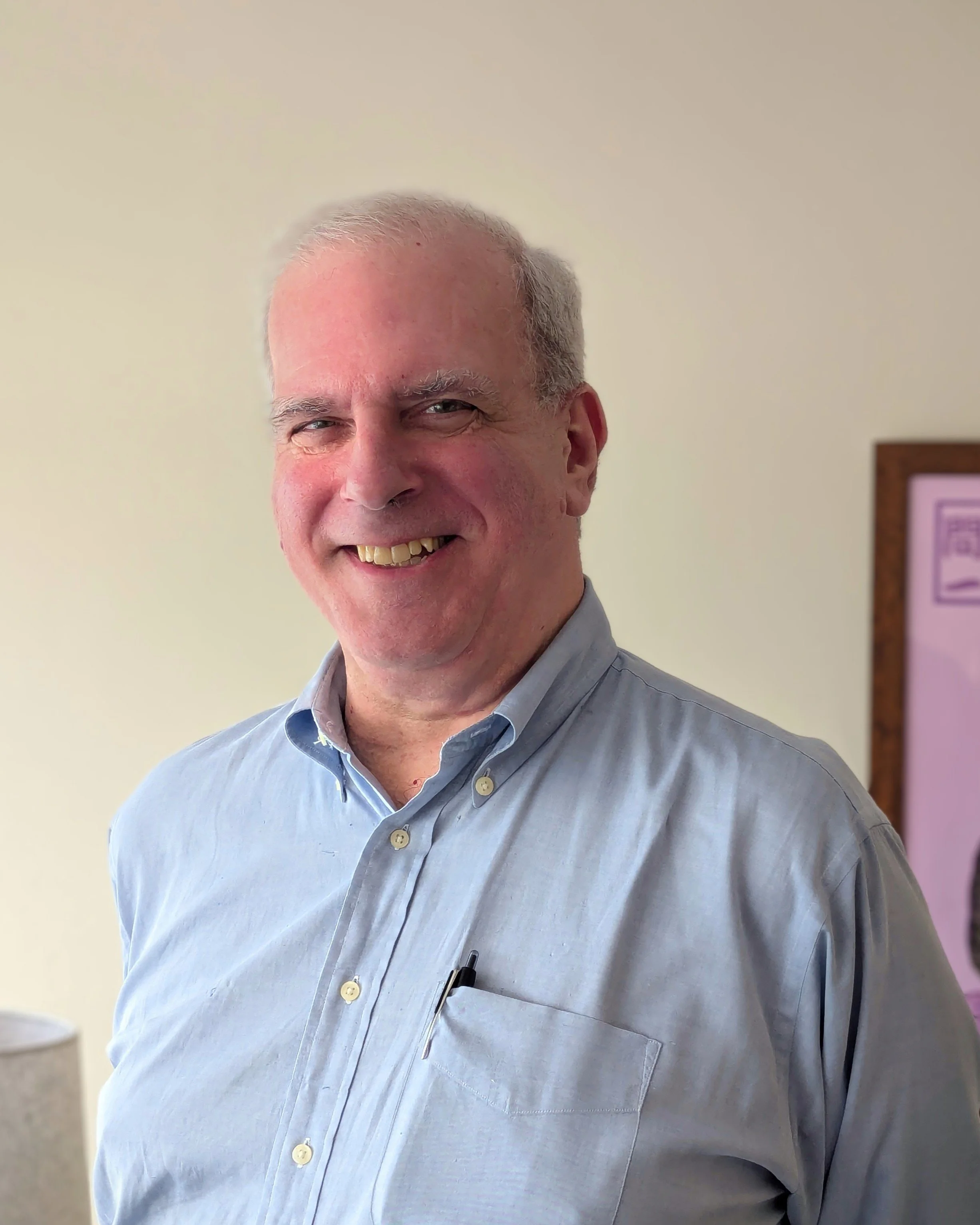
Interviewed by Jessica Harvath, Ph.D. (she/her)
February 2, 2026
Interview has been edited for length and clarity.
Interviewer: I want to invite you to think about who your ideal client is. If you had a client that you were really energized or excited to see, what are the sorts of things that person would be bringing in.
Kurt: An ideal client would probably be somebody 40 and older, dealing with middle-aged and older adult issues, which can vary—professional changes, retirement, health issues, all sorts of things that come up as people get older. Being 65, I feel like I'm working with my peers and can identify with them. I also like to approach all clients as if I can learn from them as much as they're hopefully learning from me, which makes me a better therapist.
While I have experience working with middle-aged clients, I also specialize in working with older adults (65 and older). I have a master's in Gerontology from Webster University, which—in addition to my training as a counselor—also informs my therapy work.
Interviewer: Can you tell me a little bit more about what drew you to studying Gerontology and how that study has influenced your approach to therapy?
Kurt: I was my parents’ caregiver. My father’s health deteriorated, and I helped my mother look after him. After he died, I helped my mother, who had her own issues and couldn't live alone. Also, my maternal grandparents lived with us when I was growing up, so I've been around older adults my whole life. I was in my 40s at the time, getting older myself, and I had a BA in Psychology from UMSL. The population is aging, so I thought it would be not only a personal interest but also a good career. Now that I am a therapist, I still use information from that degree.
It helps me to put myself in other people's positions a little bit more. It educated me on the myriad of issues that older adults can have. The education helped me get a better scope, understand that population better, and feel more comfortable working with them.
Interviewer: So a client who you mesh well with could be someone 40 plus, dealing with some of the unexpected things that come up in life—career transitions, caretaking for a parent while managing one's own health issues. How would you work with someone who maybe has more on their plate than they anticipated?
Kurt: If they've got a lot on their plate, I would go through each of the things that are there and find out what takes priority and what's less of a priority. We look to see if there are things they could wait on. I've had clients where the first thing we do is identify something they can put on hold. Usually, there's at least one thing. That’s one stressor you're not dealing with, and it gives you more time to deal with the other stuff.
I also try to identify what specifically about these things is stressing them out. When dealing with anxiety in particular, clients might say, "this sort of thing is making me very anxious." I ask, "What is it about that thing that is making you so anxious? Find the specifics." For an older person dealing with an elderly mother whose health is deteriorating, the distress is understandable, but what are the specific things causing their distress?
Once we identify those specific things, we look at what they can work on to affect change, and what they feel they can't change. For the things they can't change, we focus on acceptance. A lot of people dwell on what they can’t control, which I associate with beating their head against a wall. It is easier to recognize "I can't change this" and work on how to accept it and deal with it.
Interviewer: It sounds like you have an individualized approach; you’re not making assumptions about their priorities or what they can and can’t solve. You have strategies to help them understand what’s workable and what would be better to accept.
Kurt: Everybody's unique. Everybody's got their own set of circumstances. If I had five clients in their 50s who all want a career change, each one is unique; they have their own history. They might not be sure what changes they want, only that they want change, and I'll try to help them find out what that is. I don't use a "cookie-cutter" approach.

Interviewer: You talk about midlife transitions and reevaluating priorities.
Kurt: Yes, for older adults—and by older I mean 40 and up—there are all sorts of life transitions. It's not just "Should I retire?" or "Should I change careers?" but things like empty nest syndrome, where your kids are grown, and you're back to just the two of you if you're still married. That can be a big transition if your focus for decades was your children. Losing a partner or spouse means a major role change. Also, having health issues and simply the aging process can be hard for people as they realize most of their life is behind them. That can lead to depression, anxiety, and things like that.
I've noticed personally, when I turned 60, I recognized that most of my life is behind me. I see things differently time-wise now. It used to be I had no problem re-watching a movie I liked for the fifth or tenth time. Now, I feel there are better things I can do with my time, like reading a book or seeing a new movie, or spending time more productively with friends. Time feels more precious because you don't have that sense of having the rest of your life ahead.
Interviewer: It sounds like you help people reframe their situation or put things in perspective.
Kurt: I use a cognitive approach on just about everything. It's not the thing itself; it's how a person sees and interprets the thing that we work on. If I have someone who wants to find new work but is stuck on "What if I end up failing?"—we work on changing that perspective so they have more confidence in themselves and are less anxious about pursuing that change.
Interviewer: That's a great response to people who say, "Therapy isn't going to change the circumstances of my life." It sounds like you're saying a lot of distress comes from how we see things, and changing your relationship to those circumstances can help you feel better and see options you didn't see before.
Kurt: Exactly. I had a client in an intake session who said, "Here's what's going on with my life, but I'm not sure if therapy can affect any change on these circumstances." I said, "Okay, what are these circumstances you're specifically talking about? Let's start there." Maybe some of these things you can change better than you believe you can, or maybe they’re not permanent. And if they're things you can't change, we work on how we can get you to accept that. Therapy can help with that.
Interviewer: Are there other populations that you enjoy working with?
Kurt: I also have experience working with and supporting members of the LGBTQ+ population. It’s important for therapists to understand that—though members of this population may be dealing with stress associated with other people’s feelings about their identity, most LGBTQ+ people just want to talk about their depression, anxiety, or trauma that is usually not directly related to the fact that they are gay or trans—it just happens to be who they are, and it has nothing to do with their therapy.
Most of the clients I’ve dealt with in my seven years of being licensed are experiencing depression, anxiety, and trauma. I’ve also gained some experience working with clients who have OCD, which is closely related to anxiety but has its own nuances.

Interviewer: What can people expect in their first therapy session with you?
Kurt: When people come in, they fill out paperwork, including a client history. I always review the client history before I actually meet with them for the initial intake session. I get to know some of their background—what sort of issues they've had, how they coped. Then I ask them: there could be a number of things that bring them to therapy, but is there one specific thing? What is that, and how is it affecting them? Follow up sessions will build on information gathering from the first session, but it’s important to me to have a clear sense of who the client is, what are their circumstances, how have they coped, and what their strengths are.
Interviewer: What are the things you enjoy doing when you're not providing therapy?
Kurt: I like movies, and I enjoy music—different kinds of music. I go to symphonies, and I still listen to some older pop music that I grew up with, like The Beatles and Bob Dylan. I enjoy art, although I don't paint or draw, and I like to go to the Art Museum every once in a while. I love animals—I love my cat and would like to have a dog someday. I like to spend time with friends and my sister's family, and I like to go to the theater.
Interviewer: Do you have a favorite play or concert that stands out?
Kurt: I tend to like plays more than musicals. I was a subscriber at the Repertory Theater for about 30 years. I enjoy Tennessee Williams and things like that. There have been lots of plays I've enjoyed, but I've never been one to pick favorites.
Usually, the things I've enjoyed the most—books, movies, plays—were things I went into with a blank slate, like a play I'd never heard of or a concert from a new band. I remember seeing an R.E.M. concert when they only had one album out. I didn't have any expectations, and it ended up being one of the best rock concerts I went to because there was no hype. So, if I look back, the things I've enjoyed the most were a pleasant surprise.
Interviewer: That’s a wonderful parallel to life. When we have huge expectations, but the reality doesn't always live up. But if you go into something with a wide-open acceptance...
Kurt: I think what I appreciate about going to the symphony is that all the musicians are trained; they all went to school, like people go to medical or law school. You're approaching it differently, and it’s strictly a concert, not a show. You go there to hear music performed live, so you go with a different expectation than you do for a visual show. I think a lot of people would probably appreciate classical music more than they think if they gave it a chance.
Interviewer: Which sounds like a nice blend of what you were talking about earlier: having open acceptance to the unexpected things outside your control (including the disappointing things) while also trying to control or influence what you can and be reasonably prepared for the challenges ahead of you.
Kurt: It’s a difficult balance to strike, but that’s what I hope to help people with in my counseling work. Learn to look at things from a different perspective if that’s helpful, have compassion for yourself and acceptance of the things you can’t change, and maybe through reflection you can identify things that you do have the capacity to work on or change to make your life work better.